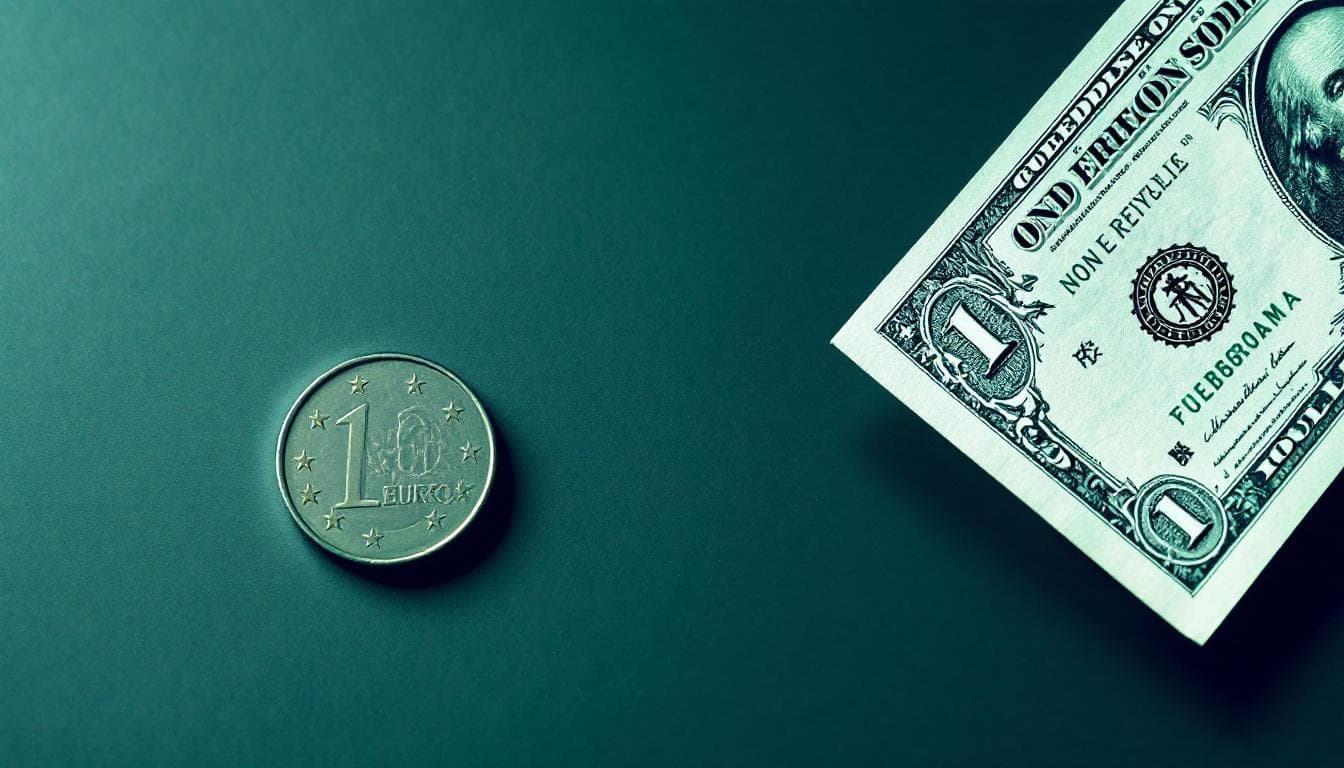
Fed Rate Hike: What It Means for European Investors
A December Fed rate hike is now almost fully priced in. What it means for European investors: the dollar, your US stocks in euros, bonds and cash.
Zune.Money Team8 min read
The Federal Reserve is now all but certain to raise rates at its meeting on 8 and 9 December 2026. For European investors, the bigger effect of a Fed rate hike is not on US share prices. It is on the euro value of everything you own in dollars. The dollar has already gained about 10% against the euro since January, and a hike makes that move harder to reverse.
This post covers what changed this week, how a Fed hike reaches a portfolio that counts in euros, and the three numbers worth checking before 9 December.

Why is the Fed about to raise rates?
Inflation in the US is going the wrong way. The October PCE report, published on 25 November, showed headline inflation at 3.8% year over year, up from 3.6% in September. Core PCE, the measure the Fed watches most, came in at 3.3% against a forecast of 3.2%, as Invezz reported.
After the data, futures and prediction markets priced the chance of a quarter-point hike in December at 94% to 98%. A New York Fed official spoke in support of a December move, and Governor Christopher Waller said a half-point hike should be on the table if core inflation stays high.
Here is where the two central banks stand:
| Federal Reserve | European Central Bank | |
|---|---|---|
| Policy rate today | 3.75% to 4.00% | 2.50% (deposit rate) |
| Last decision | Hold, October | Hold, 29 October |
| December expectation | Hike to 4.00% to 4.25% | Hike possible, about 65% priced |
| Latest inflation | 3.8% (PCE, October) | 4.0% (eurozone) |
The ECB's own October decision kept the deposit rate at 2.50% after a hike in September. We covered the start of that cycle in what the ECB rate hike means for your portfolio.
How does a Fed rate hike move the euro and the dollar?
Money goes where it earns more. When US rates rise faster than eurozone rates, dollar deposits, money market funds and short-term Treasuries pay more than their euro versions. Global investors buy dollars to get that yield, and the dollar gets stronger.
The gap between the two policy rates is about 1.4 percentage points today. A Fed hike in December with no ECB move would push it past 1.6 points. That gap is the main reason EUR/USD traded near 1.094 on 25 November, down from a 2026 high of 1.2081 on 27 January.
The rate gap is not the only force. The French debt scare in October pushed the euro to a 17-month low, and we explained that in what the French debt crisis means for your portfolio. New US tariffs also weigh on the euro (more on those below). But the Fed is the force that markets can price most precisely, and right now it points one way.
What a strong dollar does to your US stocks in euros
This is the part most coverage written for US readers leaves out. When the dollar rises, every US holding you own is worth more in euros, even if its share price did not move.
Take a US position worth $10,000, priced the same on 27 January and today:
| Date | Position in USD | EUR/USD | Position in EUR |
|---|---|---|---|
| 27 January 2026 | $10,000 | 1.2081 | €8,277 |
| 25 November 2026 | $10,000 | 1.094 | €9,141 |
The share price is flat. In euros, you are up 10.4%. The whole gain is currency.
This works in reverse too, and that is the lesson from the first half of the year. Our post on reading your returns when the euro is surging showed how a strong euro made good US returns look poor. The same maths now flatters them.
The practical risk is the decision you make on a flattering number. If your S&P 500 ETF shows a solid year in euros, part of that is a dollar move that a Fed pause, a weaker US economy or a cut in 2027 could take back. A portfolio that sits 70% in US assets carries a large currency bet, whether you chose one or not.
What a Fed hike does to US share prices
The currency tailwind is not free. Higher rates make future profits worth less today, and the companies hit hardest are the ones whose value depends most on profits far in the future. That means large tech and AI names.
This week showed it. On 23 November the Nasdaq had its best day since April 2025 after Nvidia reinstated Jensen Huang as CEO. On 24 November it fell about 1.5% as chip stocks gave back part of the rally and hike bets rose, according to CNBC's live coverage. The Dow rose the same day, as money moved from growth into value stocks.
For a euro investor, the two effects pull in opposite directions:
- Currency effect: a stronger dollar raises the euro value of US holdings
- Valuation effect: higher rates push down the dollar price of growth stocks
- Net result: depends on what you hold. A broad S&P 500 fund has felt mostly the currency effect this year. A Nasdaq-heavy or AI-heavy portfolio feels both, and the valuation hit can be bigger.
If you are not sure which group you are in, our guide to ETF overlap and Magnificent 7 exposure shows how much big tech sits inside a "diversified" world fund.
The tariff headline that landed on the same day
On 24 November, the US said it plans new tariffs of up to 20% on 14 economies, including the EU, China, Japan and Switzerland, as reported by the Washington Post. The legal basis is Section 301 of the Trade Act. The new duties replace the emergency tariffs the Supreme Court struck down in February, and they will not stack on top of existing ones except for China. January is the earliest start date.
Tariffs raise US import prices, which adds to US inflation, which gives the Fed one more reason to hike. That chain is why the tariff news and the rate news moved markets together this week. For European exporters with large US sales, the tariff cost and the currency gain partly cancel out. Our earlier look at how tariffs hit European investors covers the sectors that carry the most exposure.
Bonds and cash: where a Fed hike helps you
Not every effect is about shares.
Dollar cash. If your broker pays interest on USD balances, a higher Fed rate usually lifts that rate within weeks. Interactive Brokers, for example, links its USD rate to a benchmark that follows the Fed funds rate. Brokers differ a lot here, so check what yours pays on dollars. Our comparison of broker cash interest rates in Europe lists the main options.
US Treasuries. New Treasuries will pay more after a hike. For a euro investor, the yield comes with the same currency bet as US shares. Buying a 2-year Treasury at a 10% stronger dollar means a dollar pullback could wipe out two years of extra yield.
Euro bonds. The ECB still has its own decision to make in December. A Fed hike alone does not move euro bond yields much, but it does raise the odds that the ECB keeps tightening to protect the euro.
Three numbers to check before 9 December
You do not need to trade on a Fed decision. You do need to know what it does to your portfolio. Check these three numbers:
- Your share in USD assets. Add up every US stock and every ETF that holds mostly US stocks, then divide by your total portfolio value. If that number surprises you, it is your real currency bet.
- How much of this year's return came from the dollar. Compare each US holding's return in USD with its return in EUR. The gap is the currency part.
- Your growth-stock weight. The bigger your tech and AI share, the more a hawkish Fed can hurt the dollar price of your holdings, even as the currency helps.
A broker app shows positions and a total, one account at a time. Zune.Money imports your Degiro history, values every holding in your home currency and breaks your portfolio down by country and asset class, so the US share of your money is one number on one screen.
What happens if the Fed surprises?
A hike is almost fully priced, so the reaction on 9 December depends on the details, not the decision.
| Outcome | Likely effect on EUR/USD | Likely effect on US growth stocks |
|---|---|---|
| 25bp hike, more signalled | Dollar firmer | Pressure continues |
| 25bp hike, pause signalled | Dollar gives back some gains | Relief rally possible |
| 50bp hike | Dollar jumps | Sharp drop likely |
| No hike | Dollar falls | Rally, then questions about inflation |
None of these is a reason to rebuild a long-term portfolio. They are a reason to know how much of your return is a currency move that can reverse. Past moves in EUR/USD say nothing certain about the next one, and the tax treatment of currency gains differs by country, so check with a tax advisor where you live.
If you want to see how much of your portfolio rides on the dollar, import your Degiro CSV into Zune.Money. It takes about three minutes, it is free, and you will have your currency split before the Fed speaks.
Frequently asked questions
When is the next Fed meeting in 2026?
The Federal Reserve's last policy meeting of 2026 runs on 8 and 9 December. The decision and the new economic projections come out on the afternoon of 9 December, New York time, which is the evening in Central Europe. Markets also watch the press conference that follows for hints about January.
Does a Fed rate hike affect my Degiro account?
Not directly. Degiro does not set its prices or fees from the Fed rate. The effect comes through your holdings: US shares and ETFs that trade in dollars change value in euros when the exchange rate moves, and US share prices themselves react to higher rates. Your euro cash balance does not change.
Is a strong dollar good for European exporters?
Usually, yes. A weaker euro makes European goods cheaper for buyers who pay in dollars, and it raises the euro value of profits that companies like ASML, LVMH or Novo Nordisk earn in the US. The benefit is smaller when a company makes its products in the US or hedges its currency exposure.
Should I buy US Treasuries after a Fed hike?
Higher US rates raise the yield on new Treasuries, but a euro investor also takes the currency risk. If the dollar falls back over the life of the bond, the extra yield can disappear when you convert to euros. Euro-hedged Treasury ETFs remove most of that risk, at the cost of a lower net yield.